
Crisis Card
Your voice even when you can’t speak.
So what is a Crisis Card? Some people living with a mental health challenge may find themselves in a very stressful situation, this can lead to flashbacks, panic attacks or another state that makes communication with others hard or impossible. Ripple has developed this card as a method for a person in crisis to reach out for help. It is roughly the same size as a standard business card and will fit in any wallet. The card will also be laminated to protect it from damage and wear. So where did the idea for Crisis Cards come from?
A sudden trigger…
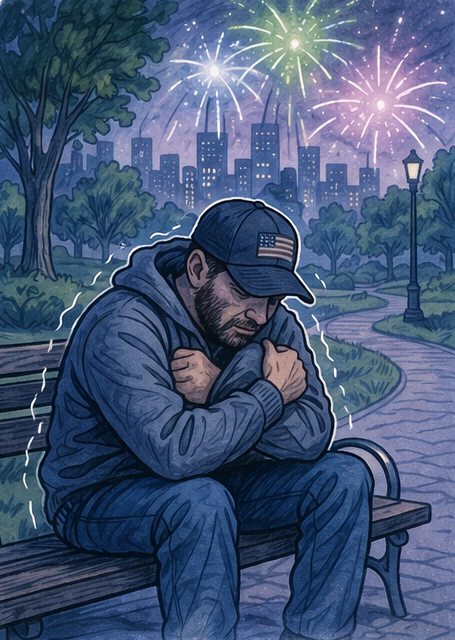
In the early 2000s, a United States military veteran returned home after serving his country, carrying with him the weight of depression and PTSD. Like many others adjusting to life after service, he did his best to find moments of peace in everyday life.
One day, he was sitting quietly in a public park. For a time, everything was calm. Then, about a block away, someone began setting off fireworks. The sudden, sharp sounds triggered a trauma response. His sense of safety disappeared. Overcome with panic, he curled up on the bench where he sat, shaking and trying to endure the moment.
A passerby noticed him and asked if he was okay, he tried to respond but all he could do was close his eyes and cover his face with his hands. The person knowing something was wrong asked if there was something they could do to help, again he could not respond. Not knowing him or his history, called 911. They reported that a man in the park appeared to be having a medical issue, possibly even going through withdrawals.
A judgement call…
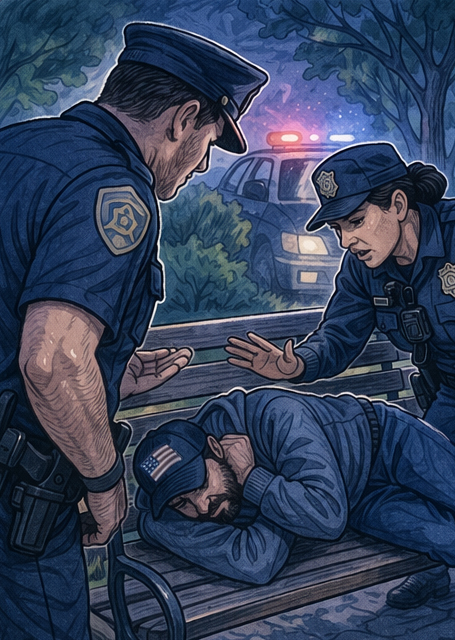
When first responders arrived, he was in the midst of a severe panic attack. and couldn’t communicate. As they approached, his fear intensified. He pulled his wallet out and dropped it on the ground and shouted “leave me alone.” For the officers his behavior appeared unpredictable and potentially dangerous. For their safety and the safety of the other first responders on scene, they wanted to place him in handcuffs.
Here is what they didn’t know, a PTSD flashback can feel as though the past is happening again in the present. For a veteran, a sudden sound like fireworks or a car backfiring can instantly shift their awareness. The park, the street, or the voices around them fade. Their mind fills with the sights, sounds, and urgency of a past moment. Their body reacts as if they are in danger right now, heart racing, muscles tense, breathing quick and shallow.
When he pulled away from them it was interpreted as resistance. The situation escalated quickly. In that moment, he was not seeing first responders, he was reacting to what his mind perceived as a threat.
A life changed…
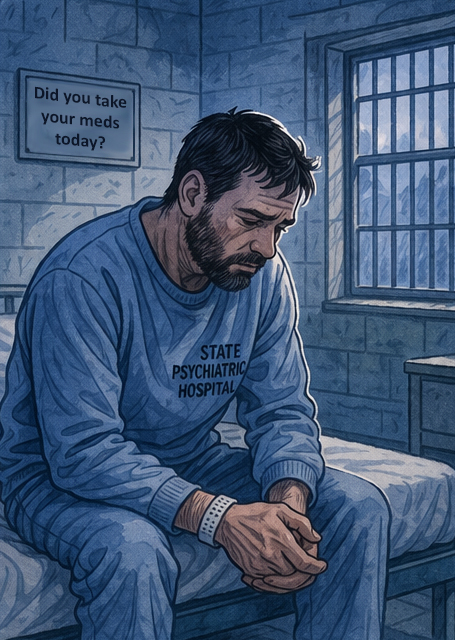
Acting out of fear, he tried to defend himself. Before it ended, one officer had been knocked to the ground and another suffered a sprained wrist. What began as a moment of personal distress ended in arrest. He was charged with assault on a police officer. In a matter of minutes, a man who had served his country found himself facing serious legal consequences. The outcome was devastating: more than two years in a state psychiatric hospital, followed by probation and a permanent criminal record.
Later, this veteran shared his story with us.
What stood out most was not just what happened, but what might have been different. If he had been able to communicate his condition in that moment, if there had been a simple way for first responders to understand what he was experiencing, the outcome could have changed entirely.
That realization became the foundation for RIPPLE’s Crisis Card Program, a simple, powerful tool that allows a person to communicate when they cannot speak, and to be understood when it matters most.
How Do I Get One?
Getting a Crisis Card is simple. Download the fillable PDF and complete it with your information. If you have any questions, please contact info@ripplect.org This is also where you will submit your completed form.
If you need assistance, a member of RIPPLE can schedule a Zoom meeting with you to complete the form together. You are welcome to invite a member of your treatment team or a trusted friend to join the meeting for additional support.
Once your card is completed and submitted, it will take approximately 7–10 business days to reach you.

Card Description:
The front of the card includes essential information such as your name, the nature of a potential emergency, and your emergency contact details. The back of the card provides guidance on how to best assist you during a crisis.
Depending on your needs, the card may also include additional information such as instructions for Good Samaritans on what not to do, relevant medical conditions, MRI warnings, and a list of medications. Each card is fully customized and will only include the information you choose to share.
Please note that space on the card is limited. We will prioritize the most critical information and, if needed, will contact you to clarify how best to proceed.
The card is approximately the same size as a driver’s license or state ID. It is printed on high-quality 28 lb paper and laminated for added durability and longevity.


Please note that Ripple takes the privacy of your medical information very seriously. Digital copies of these cards will be stored on flash drives and secured in our safe. No information will ever be stored on a computer’s hard drive with connections to the internet. The files stored on flash drives will be used in case a card is lost or information needs to be updated. This will allow us to replace cards quickly should the need arise, as with the initial card a replacement will be provided to peers free of charge.
The Crisis Card Program is available to any current resident of Connecticut.
We do not offer this service outside of our state at this time.
Recovery Innovations for Pursuing Peer Leadership and Empowerment, Inc. (RIPPLE) exists because people in our community believe in the power of lived experience to support recovery, prevent suicide, and create meaningful connection. Since 2020, we have provided peer support groups, crisis resources, and a growing network of support through rockingrecovery.org all without state funding or guaranteed annual income. Every group we host, every resource we share, and every life we touch is made possible by individuals who choose to give. Your support directly sustains this work and ensures that anyone seeking help can find a place where they are heard, understood, and not alone.